Original Link:- https://www.spotlightnepal.com/2026/02/05/nintendo-bookstore-and-quiet-power-listening/
A summer spent earning a video game became an unexpected education in conversation, community, and the art of listening.
What would you trade for a Nintendo? I was willing to give up my summer!
Growing up, I badly wanted a Nintendo, and my parents would not budge. Then, one day unexpectedly, my grandfather stepped in. He casually mentioned that he was looking for some temporary help at his bookstore and that he even had a small budget. It was good enough to buy what I wanted. I didn’t ask many questions. I took the plunge and just started.
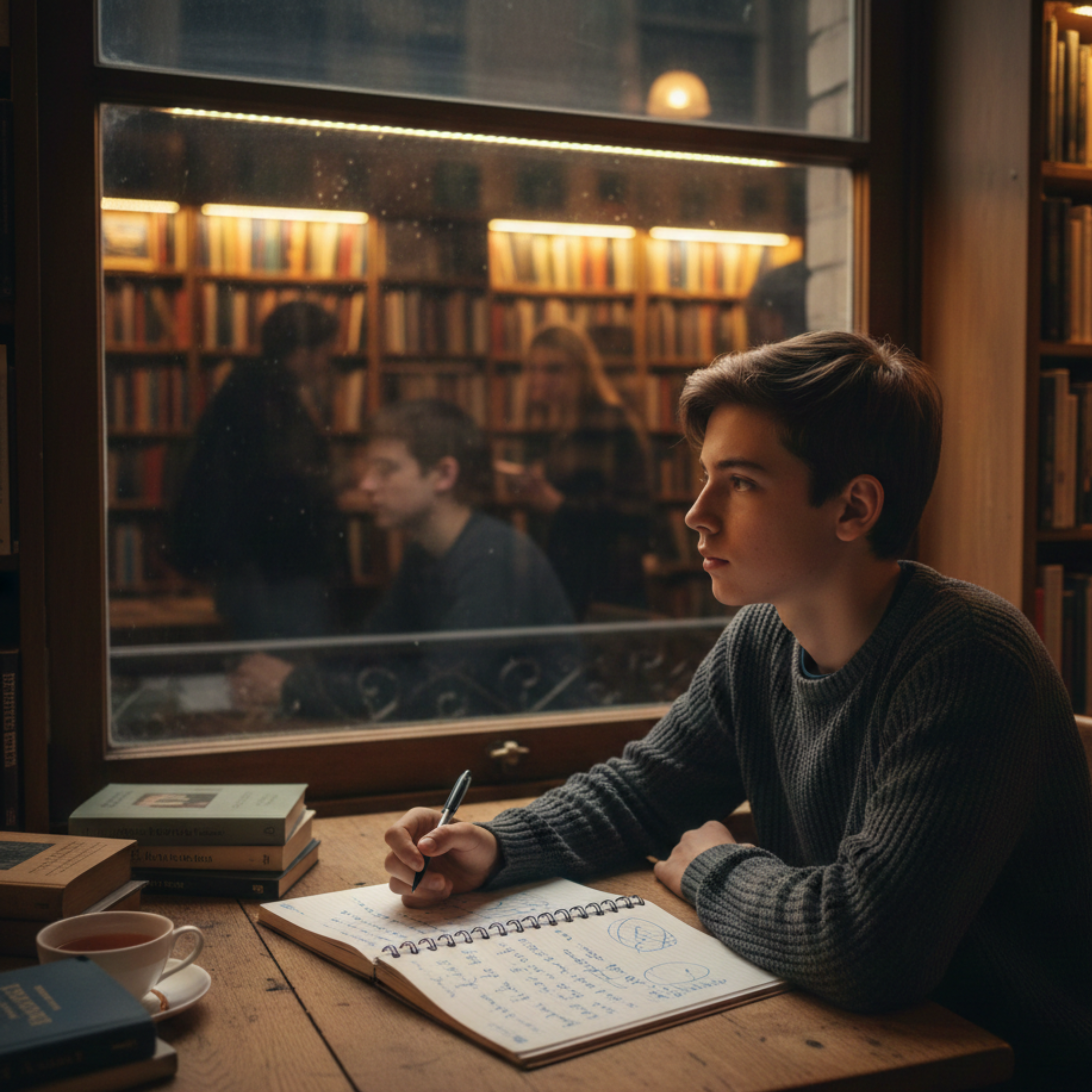
By all means, it was an ordinary bookstore. Not very large. Quiet. Lined with shelves of books whose titles meant little to me. During the day, I rearranged stacks, helped with inventory, and watched the hours pass. Customers arrived casually, already knowing what they wanted to buy, and left quickly. It didn’t feel like a place where anything important happened. For someone fascinated by corporates and finance, I often wondered looking at the sales volume whether it even made sense to remain in the business.
Then evening came.
Almost without notice, the bookstore would begin to fill. Professors stopped by after work. Students pulled chairs closer. Writers drifted in. The coffee pots seemed to supply an endless stream of coffee. Conversations began-not loudly, not urgently. Politics slipped into philosophy. Philosophy wandered into literature, and literature into society. People disagreed often, but no one seemed eager to win an argument or arrive at a conclusion.
What struck me most was the absence of performance. Titles and credentials stayed at the door. People did not speak to impress. They spoke to think out loud, and even more, to listen.
At first, all of this felt alien. Much of it sounded like noise to me. In school, where science, mathematics, computers, and measurable outcomes dominate, I wondered what could possibly be so interesting about history or philosophy. Why would anyone spend hours discussing questions that seemed abstract or impractical, questions that could be generated on the spot? I even caught myself thinking that perhaps old age simply left people with too much time. Otherwise, why would they return evening after evening?
Over time, I began to share my own views. Interestingly, no one dismissed me. Instead, they tried to understand why I thought the way I did. I had not expected this. I assumed I would be dismissed or challenged with. Instead, I was listenedto. I felt respected, and gradually, I felt a responsibility to return that respect.
I soon began to speak not to prove a point, but to explore one. Making a conscious effort to wait, I learned to respond rather than react. Over time, I noticed that the strongest arguments were often built slowly, through attention and restraint. In this process, without realizing it, I was developing skills that later shaped my interest in debate-not debate as competition, but as dialogue.
It took me weeks to understand what my grandfather had really built. This was not just a bookstore. It was a social space. A place where people could gather without obligation, without algorithms, and without the pressure to perform. A place where disagreement did not fracture relationships, and where silence was allowed to exist alongside speech.
In today’s world, such spaces feel increasingly rare. Digital technologies promise connection, yet often deepen isolation. Conversations are compressed into fragments. Disagreement turns into spectacle. Listening becomes secondary to visibility. The bookstore offered the opposite: slowness, presence, and attention. It reminded me that meaningful social interaction is not automatic. It must be consciously created, protected and practiced.
That summer changed how I understood communities and social interaction. I learned that societies grow when people feel seen and valued in shared spaces. Community is not built through agreement alone, but through a willingness to stay in conversationand arrive at understanding together. And I learned that listening is an art.
So what would I trade for a Nintendo?
Another summer at my grandfather’s bookstore, gladly.