Original Link:- https://medium.com/@meetroniksharma/what-building-a-solar-tricycle-taught-me-about-real-markets-c599861e03e4
Most people recognize this feeling. You rehearse a speech endlessly, refining every line and anticipating every pause. Then the moment arrives. You step onto the stage and freeze. What finally comes out bears little resemblance to what you practiced, less polished, less controlled, but importantly honest and closer to the truth.
My education in microeconomics has followed a similar path.
Studying finance, in my textbooks in the USA, markets appeared orderly. Supply curves sloped upward. Demand curves sloped downward. Prices met neatly at equilibrium. Microfinance, in particular, was presented as an elegant solution: provide small loans, often without collateral, structure repayments carefully, and markets responded. Growth would follow, inclusion expand and prosperity took root.
The lesson was reassuringly simple. Give small and medium enterprises access to even modest capital, and the rest largely took care of itself.
I absorbed this logic almost as doctrine.
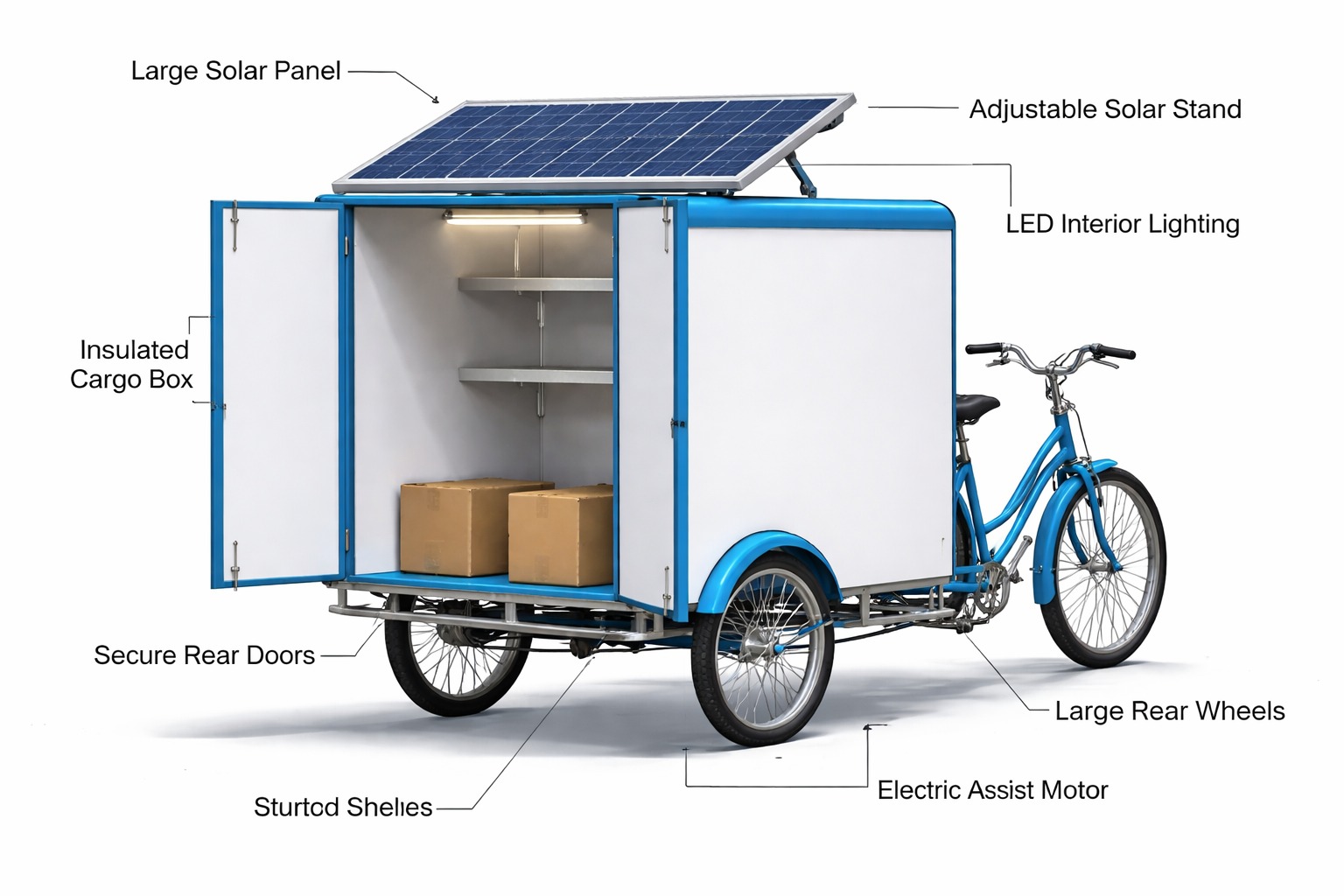
Then I found myself in a workshop in Nepal, building a solar tricycle for customers who clearly needed it but lacked both upfront capital and access to formal finance. A paradox so difficult to grasp from the American context, where access to credit is largely assumed.
That experience quietly dismantled many of my assumptions about products, markets, and finance.
Trying to sell the solar tricycle made one reality unmistakable products also fail because the people who need them cannot access them. Nepal taught me that the constraint was not preference, technology or productivity, but finance. My entrepreneurial success depended on my ability to translate the intent of my customer into ownership through appropriately designed financial instruments.
In the Gilman classroom, microfinance had appeared as a simple input, but in practice in Nepal,textbook microeconomics began to thin. It revealed itself as a design problem of the highest order.
It was not merely about providing small loans, but about structuring them around cash flows, risk profiles, and the rhythms of daily life tied to a specific product. A solar tricycle could generate income, but only if financing aligned with how that income arrived. Repayment schedules, interest structures, and trust mattered as much as engineering specifications. Capital, I learned, is not neutral. It amplifies or constrains depending on how it is designed.
I realized that the microfinance supporting the solar tricycle, had to contend continuously with uncertainty and volatility: weather, fluctuating incomes, health shocks, and informal obligations. Risk was not an abstract parameter to be modeled; it was to be lived and managed daily. In the process, what stuck me was that many financial products fail not because borrowers are irrational, but because their design are too rigid to absorb uncertainty.
The challenge, then, was not simply to apply an ideal financial theory and design, but design a microfinance product as a living system, one capable of adapting, evolving, and surviving amid constant change, yet delivering both for the lender and the borrower.
My innovation of Solar Tricycleremains modest in scale but systemic in reach. It links clean energy to income generation, mobility to productivity, and technology to finance. Yet no single component matters on its own. What matters is alignment: between product and capital, risk and reality, theory and life as it is lived.
Working to make the tricycle affordable through microfinance taught me the most enduring truth about markets: the most powerful economic ideas are not those that explain the world neatly, but those that work within its messiness, and move people forward.
Published Link:- https://www.spotlightnepal.com/2025/12/21/what-building-solar-tricycle-taught-me-about-real-markets/
Ronik Sharma, Senior, Gilman School, Baltimore, USA