Original Link:- https://medium.com/@meetroniksharma/why-a-solar-tricycle-has-disproportionate-strength-1f76bb9309d0
Some technologies look powerful the moment you see them: big machines, towering infrastructure, complex systems and built at scale. Others appear modest, even ordinary compared to them. And yet, they quietly carry and deliver extraordinary strength. My solar tricycle is one such machine.
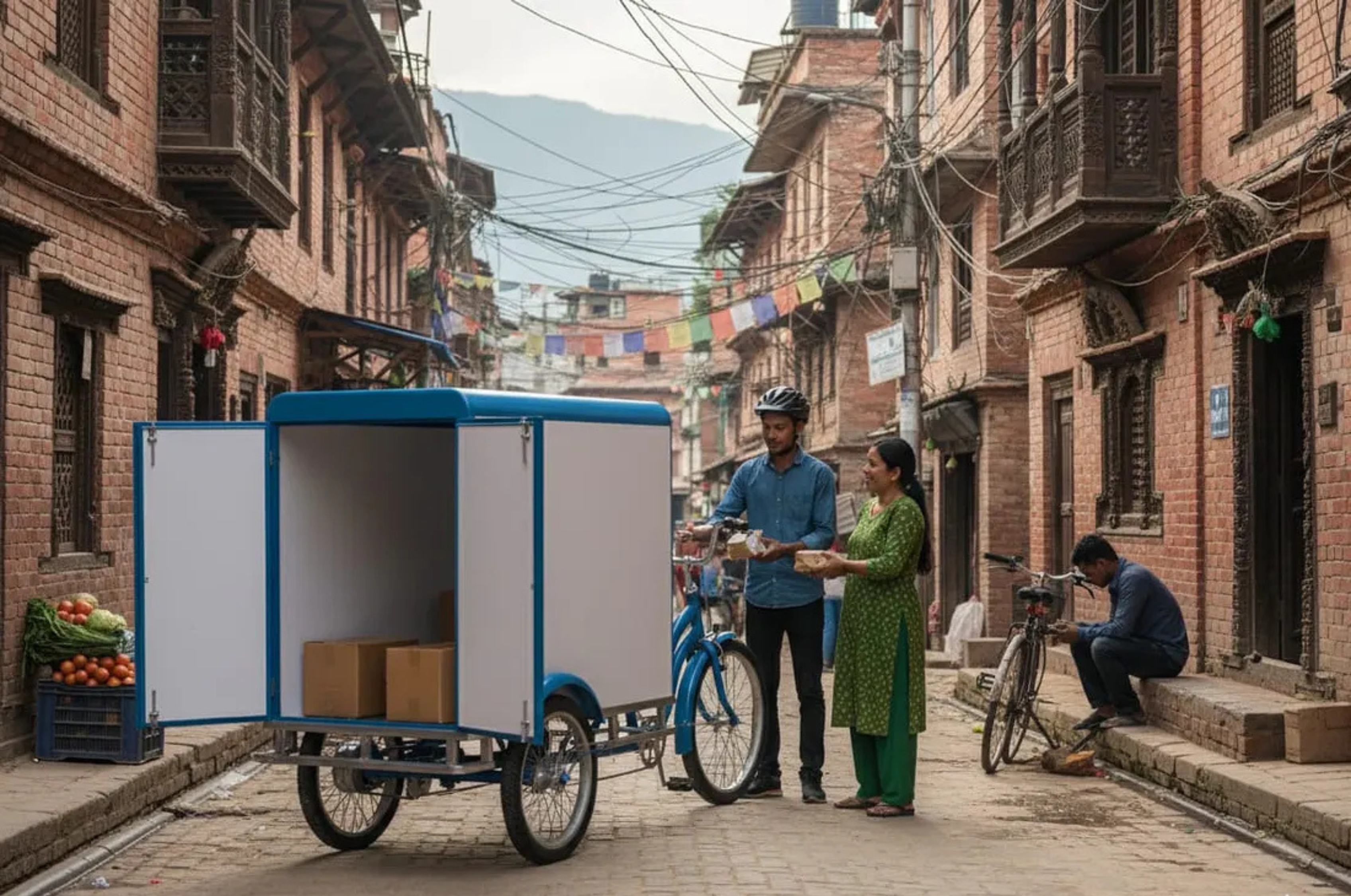
The small, solar-powered tricycle sits at the confluence of three powerful systems: energy, finance, and technology. It generates its own clean power and delivers 15 miles of mobility with a payload of 220 lbs at a top speed of 15 mph on a single charge. It relies on affordable, accessible engineering and directly enables economic activity across multiple domains. In doing so, it quietly rewires how these systems interact, without the need for massive infrastructure or centralized control.
Energy is the first layer. Unlike large power plants or grid-dependent vehicles, a solar tricycle operates at the edge. It consumes little energy and, in many cases, produces its own. This makes it resilient. It does not wait for perfect grids, charging stations, or large-scale investments. It works where energy scarcity is real and reliability matters most.
Technology is the second layer. The innovation here is not sophistication, but appropriateness. Simple motors, basic electronics, and modular design make the vehicle easy to repair, adapt, and replicate. This kind of technology spreads quickly because it is understandable and usable. It lowers the barrier between innovation and adoption.
Finance is the third and often overlooked layer. A solar tricycle becomes transformative only when it is financially accessible. Microfinance and small lending play a decisive role here. When modest capital is paired with a productive asset, it turns technology into livelihood. The vehicle is no longer a product; it becomes a means of income generation, cost reduction, and economic stability.
This is where real power emerges. A single, small machine improves energy access, enables work, lowers operating costs, and reduces environmental impact, all at once. No mega-project is required. No sweeping reform is needed. Change happens at human scale.
We often assume that systemic change must come from large, centralized solutions: massive factories, national grids, or global platforms. But modest tools like a solar tricycle challenge this bias. They show that innovation can be distributed, incremental, and deeply local, yet still system-shaping.
I believe the future of sustainable mobility and economic resilience will not be built only through grand projects and complex systems. It will also be shaped by small machines that quietly align energy, finance, and technology, making everyday life a little more efficient, a little more resilient, and a little more human.
The question is: in our hunger for bigger and impactful solutions, are we paying enough attention to the small ones already capable of making a big change?
